


Bladder cancer scientists recreate DNA damage with toxin found in cigarette smoke
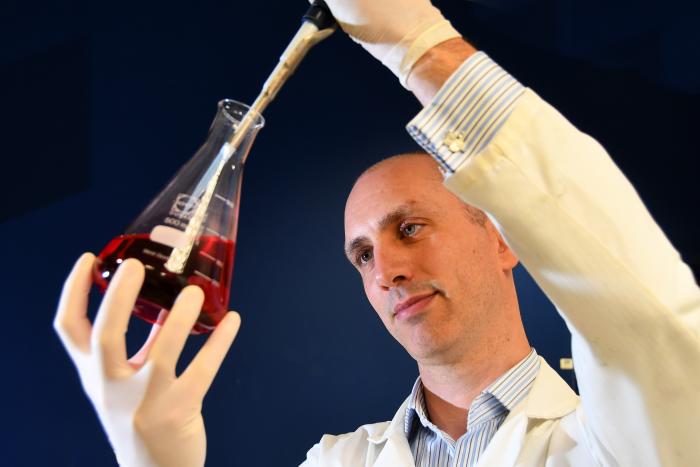
PICTURE: Dr Simon Baker in the lab
York Against Cancer-funded scientists investigating the causes of bladder cancer have recreated the tell-tale signs of cancer-causing DNA damage in cells exposed to a common toxin from cigarette smoke.
Researchers from the Jack Birch Unit (JBU) at the University of York found a pattern of changes called a ‘mutational signature’ in human bladder tissues grown in their laboratory and exposed to benzo[a]pyrene, a carcinogenic component of cigarette smoke.
It’s hoped the discovery will help scientists understand how bladder cancer begins and its links to smoking.
“The causes of bladder cancer remain largely unknown,” said Dr Simon Baker, the JBU’s Deputy Director. “Smoking is the main risk factor for the disease, but the way that smoking causes bladder cancer is not understood.”
After deliberately damaging the bladder tissues they had grown, the JBU team analysed all 3 billion letters of the genetic code (DNA) to find a ‘mutational signature’ – a pattern of changes that can be caused by anything from exposure to cigarette smoke or UVA from the sun to an unknown cancer-causing event.
“Mutational signatures can be used like fingerprints at a crime scene,” said Dr Baker. “When we look at the DNA in a cancer we can see the fingerprints of all the criminals involved in causing the damage that led to cancer.”
The York study found that the smoke toxin left its distinctive fingerprints on the DNA of bladder tissues grown in the laboratory. However, when they looked at the DNA of patients’ bladder cancers this pattern (or mutational signature) was only responsible for a small amount of the damage.
So despite smoking being the key risk factor for bladder cancer, direct damage of the DNA by smoke toxins is unlikely to be the main reason for these cancers forming.
It may be that the smoke toxins enhance other DNA damaging events and attention is now focusing on a family of enzymes called "APOBEC”. APOBEC enzymes destroy viruses by mutating their DNA as part of the body’s natural defences against infection, but recent studies suggest they might mistakenly target our own DNA in a number of cancer types. Understanding how and why APOBEC becomes activated in the cells of the bladder will be the team’s next challenge.
The research, led by Dr Baker, Dr Andrew Mason and Professor Jenny Southgate, Director of the JBU, was funded primarily by York Against Cancer. It has been published in the Journal European Urology.